
Rotary vs. Horizontal EVA Shoe Making Machines: Which Production System Fits Your Factory?
September 25, 2026
Choosing between rotary and horizontal EVA shoe making machines depends on product mix, production volume, mold configuration, factory layout, and the level of automation required. Rotary systems use multiple stations around a rotating table, allowing different molding stages to run at the same time. Horizontal systems use a linear arrangement and can suit production lines that prioritize straightforward access, flexible configuration, or specific product requirements. The right choice therefore depends on the production plan rather than machine type alone.
For an EVA footwear manufacturer, this decision affects much more than the initial equipment purchase. Machine layout influences mold capacity, operator movement, cycle management, floor space, energy use, maintenance access, and future expansion.
EVA materials are widely used for midsoles, outsoles, slippers, sandals, and other footwear components. The material can undergo injection molding and foaming processes that require controlled temperature, pressure, timing, and mold conditions. Research also identifies injection molding as an important production route for EVA footwear components.
Imagine a factory producing thousands of pairs of one-color EVA slippers every day. A multi-station rotary system can overlap injection, heating, cooling, and demolding activities. Another factory may produce several footwear styles in smaller batches. Its production priorities may favor a horizontal configuration with easier access between stations.
The comparison becomes clearer when the machine is evaluated as part of the entire production system. A suitable EVA shoe making machine should match the product, material formulation, mold design, target output, available space, and labor structure.
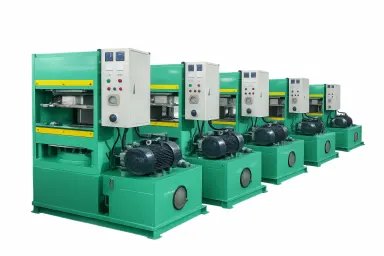
How Do Rotary and Horizontal EVA Shoe Making Machines Work?
The main difference comes from how the machine organizes its molding stations.
A rotary machine places multiple stations around a rotating platform. Each station can hold a mold or a mold set. As the table rotates, molds move through different production stages.
A horizontal machine uses a linear arrangement. Stations or mold positions extend along a horizontal production line. Depending on the machine design, operators or automated systems move molds through the required stages.
Both approaches can support EVA footwear production. The difference lies in how the machine manages time and space.
Rotary Machine Operating Principle
A rotary system can perform different operations simultaneously.
One station may receive EVA material while another station completes heating. A third station may undergo cooling or demolding.
The rotary table then moves each mold to the next stage.
This arrangement allows the machine to overlap production activities instead of waiting for one complete cycle before starting another mold.
For high-volume footwear production, this can become an important factor.
EVA molding requires controlled processing conditions. Temperature, pressure, and timing can influence the final product dimensions and foam structure. Patent literature also describes the importance of controlling these parameters during EVA sole molding.
Horizontal Machine Operating Principle
A horizontal system arranges production positions in a linear direction.
The layout can provide direct access to individual mold stations. This can simplify mold handling, inspection, adjustment, and maintenance in certain factory configurations.
Horizontal equipment can also support different levels of automation.
The exact configuration varies by manufacturer. Some systems focus on specific EVA footwear products, while others support broader molding operations.
Therefore, buyers should evaluate the machine’s actual station design instead of assuming that every horizontal machine has the same production characteristics.
Why Does Machine Layout Matter?
The layout affects how people, molds, materials, and finished products move through the factory.
A rotary system concentrates multiple stations around one central area. A horizontal system extends production along a line.
This creates different requirements for:
- Factory floor planning
- Mold loading
- Operator access
- Material handling
- Maintenance space
- Cooling arrangements
- Product collection
- Future machine expansion
The machine should therefore be evaluated together with the factory layout.
What Are the Main Differences Between Rotary and Horizontal EVA Machines?
The most useful comparison focuses on production behavior rather than labels.
| Factor | Rotary EVA Machine | Horizontal EVA Machine |
|---|---|---|
| Station arrangement | Circular | Linear |
| Production flow | Rotational | Sequential or linear |
| Concurrent operations | Strong potential | Depends on machine configuration |
| Operator access | Concentrated around rotary table | Direct access along production line |
| High-volume production | Often suitable | Depends on line design |
| Mold handling | Centralized around stations | Distributed along the line |
| Floor planning | Compact around central equipment | Requires linear floor space |
| Product changeover | Depends on station and mold design | Can offer accessible station changes |
| Automation | Can support integrated automation | Can support modular automation |
| Maintenance access | Depends on machine layout | Often straightforward at individual stations |
| Best fit | Repetitive, higher-volume production | Flexible or specific linear production setups |
This table provides a framework rather than a universal rule.
Actual production capacity depends on mold cavities, cycle time, injection system, heating method, cooling method, machine configuration, and product design.
Production Capacity
Rotary equipment can create overlapping production stages.
Suppose one molding station needs several minutes to complete heating and foaming. A rotary system can use other stations during that period.
This reduces the need to wait for the complete process before starting another mold.
A horizontal system can also achieve high output when its line contains multiple synchronized stations. The difference depends on the actual machine architecture.
Buyers should request production calculations based on the intended product and mold.
Factory Space
Rotary equipment can concentrate production activity within a circular working area.
This may simplify some factory layouts, especially where the manufacturer wants several operations around one machine.
Horizontal systems extend along a line. This can work well when the factory already uses linear material flow.
Neither layout automatically requires less space.
The buyer should calculate the complete footprint, including operator access, mold storage, material handling, cooling equipment, electrical cabinets, and maintenance clearance.
When Is a Rotary EVA Shoe Making Machine a Practical Choice?
Rotary equipment often fits factories that need repeated production cycles across multiple stations.
A typical example is a factory producing a large volume of standard EVA slippers.
The product may use the same general molding process for long production runs. In this situation, overlapping station operations can support a continuous workflow.
High-Volume Slipper Production
Slippers often require relatively repetitive production patterns.
A rotary EVA slipper making machine can arrange multiple molds around the rotating table. Each mold progresses through the same sequence.
This configuration can support stable production planning when the factory runs similar products for extended periods.
The machine may also support different mold sets depending on its design.
For manufacturers producing several sizes of one product, mold planning becomes particularly important.
Multi-Station Production
The biggest structural advantage of a rotary design comes from simultaneous station activity.
One station does not necessarily need to wait for every other station to finish.
The production cycle becomes a sequence of overlapping operations.
This approach can improve machine utilization when the process requires significant heating or curing time.
Centralized Operator Workflow
A rotary machine can place several stations around one working area.
This arrangement can allow operators to monitor multiple mold positions without walking along a long production line.
The actual labor requirement depends on automation and machine design.
A factory should therefore evaluate operator movement during a complete production cycle before purchasing the equipment.
When Can a Horizontal EVA Shoe Making Machine Make Sense?
Horizontal equipment can fit factories that prioritize linear production flow or specific product configurations.
The term “horizontal” does not describe one standardized machine architecture. Different manufacturers may use different injection, heating, mold-clamping, cooling, and material-handling arrangements.
This makes technical comparison especially important.
Flexible Production Layout
A linear system can integrate with a factory that already follows a straight material flow.
Raw materials can enter one side of the production area, while molded footwear components move toward finishing or assembly.
This can simplify internal logistics.
Mold Accessibility
Horizontal configurations may provide convenient access to individual mold positions.
This can help when production requires frequent inspection or mold adjustment.
The benefit becomes more relevant for factories producing several designs in smaller batches.
Product Development
Factories that frequently introduce new EVA footwear designs may value easy access to molds and process stations.
For example, a factory may produce slippers during one production period and then switch to another sole design.
Changeover time should therefore become part of the purchasing calculation.
A machine with a lower nominal output can still make sense if it reduces downtime between different product batches.
How Does Product Type Affect the Machine Choice?
Machine selection should start with the footwear product.
An EVA slipper, sports shoe midsole, sandal sole, and boot can require different mold dimensions, injection volumes, cycle conditions, and handling arrangements.
EVA materials themselves also come in different formulations and grades. Commercial EVA resins are used for footwear, injection molding, and foaming applications.
EVA Slippers
Slipper production often emphasizes output, repeatability, mold utilization, and color options.
A factory producing large quantities of similar slippers may benefit from a rotary production arrangement.
For two-color or multi-color products, the machine must support the required injection configuration.
A suitable EVA slipper foaming machine can be considered when the production plan requires two-color slipper molding.
EVA Shoe Soles
Shoe soles can involve more complex shapes and different mold designs.
The machine should provide sufficient injection capacity and clamping capability for the intended mold.
Mold dimensions also affect the number of cavities that can be installed at each station.
A buyer should provide actual sole drawings or sample products when requesting a machine recommendation.
EVA Midsoles
Midsoles often require controlled density, shape, and dimensional characteristics.
The machine configuration must work with the selected EVA compound and foaming process.
A dedicated EVA foaming machine may suit one-color EVA footwear production where the production plan centers on consistent molding conditions.
EVA Boots
Boots create different machine requirements because of their height and mold geometry.
A vertical or specialized rotary configuration may become more appropriate for tall footwear products.
The factory should not select a machine based only on the word “EVA.” Product geometry can change the equipment requirement substantially.
What Production Factors Should Buyers Compare Before Purchasing?
Machine comparison should use measurable production data.
A supplier quotation may list injection volume, machine dimensions, motor power, number of stations, and mold capacity. These specifications matter, but they do not tell the complete production story.
1. Target Daily Output
Start with the required number of pairs per shift.
For example, a factory planning 20,000 pairs per day has different equipment requirements from a workshop producing 3,000 pairs.
The calculation should include:
- Number of molds
- Number of cavities
- Cycle time
- Machine utilization
- Changeover time
- Planned downtime
- Operator availability
2. Product Mix
A factory producing one standard slipper design can optimize around repetition.
A factory producing 30 designs may need more flexibility.
Product mix directly affects the value of fast mold changes and accessible workstations.
3. Mold Investment
Molds can represent a significant portion of footwear production investment.
The machine must accommodate the planned mold dimensions and clamping requirements.
A low machine price does not help if the required mold cannot fit the station.
4. Material Formulation
Different EVA formulations can behave differently during processing.
The machine should match the material’s processing window and foaming method.
Buyers should provide compound information during technical discussions.
5. Energy Consumption
Energy costs influence long-term production economics.
Heating systems, hydraulic systems, motors, cooling equipment, and auxiliary systems all contribute to energy use.
Instead of comparing motor power alone, buyers should request estimated energy consumption under the intended production conditions.
6. Maintenance Requirements
Maintenance affects uptime and production planning.
Ask about heating elements, hydraulic components, injection systems, control systems, seals, sensors, and common wear parts.
A clear maintenance schedule helps factories plan spare parts and technician support.
How Should Buyers Compare Rotary and Horizontal Machines in a Real Project?
A practical comparison should use the same production target for both machine types.
Suppose a factory plans to produce 10,000 pairs of one-color EVA slippers per day.
The buyer can request two technical proposals.
The first proposal uses a rotary configuration. The supplier should calculate required stations, molds, cycle time, and expected output.
The second proposal uses a horizontal configuration. The supplier should provide the equivalent production calculation.
The comparison should then examine output, floor area, mold count, labor requirements, energy consumption, changeover time, maintenance access, and expansion potential.
This method is more useful than comparing machine names.
A Sample Decision Matrix
| Production Requirement | Rotary Configuration | Horizontal Configuration |
|---|---|---|
| Large repeated batches | Consider station utilization | Compare line cycle carefully |
| Frequent mold changes | Review station accessibility | Evaluate linear mold access |
| Compact central workflow | May fit well | Requires longer layout |
| Straight material flow | May require different logistics | Often aligns naturally |
| Multiple simultaneous stages | Strong potential | Depends on station design |
| Mixed product portfolio | Evaluate changeover design | Evaluate modularity |
| Future capacity expansion | Check available station options | Check line extension options |
The final selection should come from actual factory data.
What Should a Factory Ask an EVA Machine Supplier?
A serious equipment inquiry should include more than “What is the machine price?”
The supplier needs enough information to calculate whether the machine matches the production target.
Provide:
- Product type
- Product dimensions
- Product weight
- EVA material formulation
- Number of colors
- Target output per day
- Working hours per shift
- Planned mold size
- Number of cavities
- Available factory space
- Local power supply
- Automation requirements
The supplier can then recommend a machine configuration based on actual production conditions.
Ask for a sample production calculation as well.
The calculation should explain how the quoted output comes from cycle time, station count, cavity count, and operating hours.
This makes equipment comparisons much easier.
How Do Rotary and Horizontal Machines Affect Factory Expansion?
Equipment selection should consider the next production stage, not only today’s order volume.
A factory may start with one machine and add additional capacity later.
Rotary systems can support expansion through additional machines or upgraded configurations, depending on the model.
Horizontal systems may allow expansion along the production line.
The available factory space becomes important in both cases.
A buyer should reserve enough space for utilities, material handling, mold storage, maintenance access, and future equipment.
Expansion Example
Imagine a footwear factory starts with five product designs.
After two years, the factory adds sandals and sports shoe midsoles.
The original machine may still support some products, but its mold size, injection volume, or color configuration may become limiting factors.
A machine selected with future products in mind can reduce the need for premature replacement.
This does not mean buying the largest machine available.
Oversized equipment can increase investment and operating costs without providing useful capacity.
The goal is to create a production system that matches realistic growth plans.
What Are the Common Mistakes When Choosing an EVA Shoe Machine?
One common mistake is choosing equipment based only on the highest stated output.
Nominal capacity may not reflect the actual product, mold, material, and cycle conditions.
Another mistake is ignoring product mix.
A machine optimized for one-color slippers may not provide the same production flexibility for two-color soles or complex footwear components.
Factory layout also receives too little attention.
A machine may fit the technical specification but create inefficient material movement inside the workshop.
Mold compatibility represents another important consideration.
Before placing an order, confirm mold dimensions, cavity configuration, clamping requirements, injection volume, and cooling requirements.
Energy consumption should also enter the calculation.
A machine with higher output may not provide better production economics if the additional capacity remains unused.
FAQ About Rotary and Horizontal EVA Shoe Making Machines
What is the main difference between rotary and horizontal EVA machines?
A rotary machine arranges production stations around a rotating table. A horizontal machine uses a linear production arrangement.
The choice depends on product type, production volume, mold configuration, factory layout, and automation requirements.
Which machine is suitable for EVA slipper production?
Both configurations can produce EVA slippers.
For high-volume repetitive production, a multi-station rotary configuration can support overlapping production stages.
The final selection should depend on required output and the actual machine specifications.
Can a rotary EVA machine produce different shoe designs?
Many rotary systems can use different molds, but the practical flexibility depends on station dimensions and machine configuration.
Frequent mold changes should be considered when planning production.
Can horizontal machines produce EVA soles?
Yes.
Horizontal equipment can support EVA sole production when its injection, clamping, heating, and mold specifications match the product requirements.
What affects EVA shoe machine output?
Output depends on several variables.
Cycle time, mold cavities, number of stations, machine configuration, material behavior, product size, operator workflow, and downtime all affect production.
Does a larger machine always produce more EVA shoes?
No.
Machine size alone does not determine production output.
The number of cavities, cycle time, station count, mold design, and process conditions can have a major influence.
What EVA material can an EVA shoe machine process?
The machine should match the EVA compound and its processing requirements.
Different EVA grades can have different vinyl acetate content, melt characteristics, and processing behavior. Material selection should therefore form part of the machine specification.
How many molds does an EVA shoe making machine need?
The answer depends on the machine layout, product design, output target, and cavity arrangement.
A production calculation should determine the required mold quantity.
Is an EVA shoe making machine suitable for two-color footwear?
Some machines support two-color or multi-color injection.
The buyer should confirm the number of injection units, mold configuration, material compatibility, and control system before purchase.
What information should I send when requesting an EVA machine quotation?
Provide the product sample or drawings, product weight, dimensions, material information, color requirements, target output, mold details, working hours, and factory power conditions.
This allows the supplier to recommend a machine based on actual production requirements.
References
- Dow, EVA Copolymers and Footwear Applications:
https://www.dow.com/en-us/pdp.elvax-460-ethylene-vinyl-acetate-copolymer.1893117z.html - Springer Nature, Mechanical Characterization and Sustainability Assessment of Recycled EVA for Footwear:
https://link.springer.com/article/10.1007/s00170-023-11332-1 - U.S. Patent and Trademark Office, EVA-Based Footwear Manufacturing Process:
https://patents.google.com/patent/US10221310B2/en - U.S. Patent and Trademark Office, EVA-Based Foam Shoe Component Manufacturing:
https://patents.google.com/patent/US20040261297A1 - United States International Trading Corporation, EVA Ethylene-Vinyl Acetate Copolymers:
https://www.usife.com/en-us/dirProduct/frmProduct2
Bayeux manufactures EVA footwear production equipment for shoe, slipper, sole, and related EVA molding applications. Its machine range covers different production configurations for manufacturers evaluating equipment according to product type, output requirements, mold design, and factory layout. Bayeux works with footwear manufacturers to match machine configuration with practical production requirements rather than relying on machine size alone.


