
About Bayeux: Industrial Machinery Solutions for Hygiene and Footwear Manufacturing
Bayeux Industrial designs and integrates automated production systems for hygiene products and footwear manufacturing. We provide factory-ready machinery solutions combining precision equipment, production material compatibility, and engineering support for continuous industrial operations.

24/7 Technical Response
On-site engineer dispatch, live PLC remote diagnostics, and emergency technical troubleshooting to minimize plant downtime.

100+ Factory Deployments
Active automated production lines fully installed and operating across Asia, Africa, Europe, and South America.

2 Dedicated Divisions
Specialized engineering teams focused exclusively on hygiene products machinery and automated footwear injection systems.

100% Pre-Shipment Testing
Every manufacturing line undergoes full-speed operational trials using matched raw materials before dispatch verification.
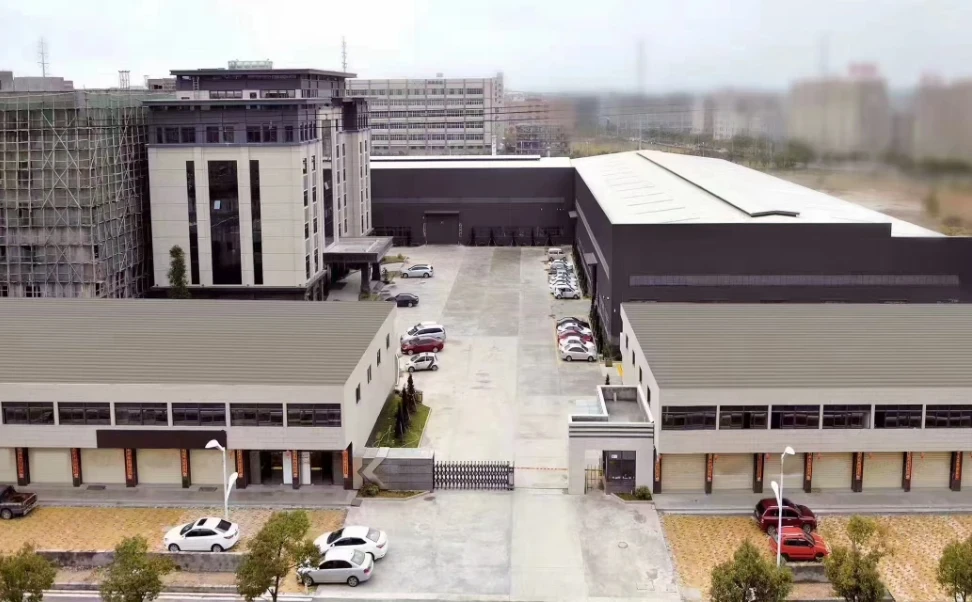
Integrated Industrial Manufacturing Solutions
Bayeux Industrial design, engineers, and builds automated production machinery for the disposable hygiene and footwear manufacturing sectors. As a manufacturing equipment supplier, we provide factory-level integration solutions—spanning precision equipment R&D, custom tool and mold fabrication, on-site installation, mechanical debugging, and plant operator training.
Traditional hygiene product manufacturing often suffers from manual feeding inconsistencies, material tension fluctuations, and unstable adhesive application. Bayeux production lines integrate full-servo synchronization, automatic web guiding, and intelligent tension control to maintain stable product dimensions throughout continuous production.
By deploying full-servo control systems, synchronized raw material feeding, and high-precision thermal molding technologies, we assist global factories in stabilizing their daily output rate, reducing raw material wastage, and lowering dependence on manual labor.
Specialized Manufacturing Machinery & Systems
We specialize in engineering high-performance automated production systems across two primary industrial divisions: hygiene product machinery and automated footwear injection systems.
⚙️
Hygiene Product Machinery
We deliver fully integrated, high-precision automated production lines designed for scale. Our machinery features advanced full-servo drive systems, smart PLC control interfaces, and non-stop material splicing technology. These systems enable hygiene manufacturers to run continuous, high-speed operations with minimal waste and maximum process stability.
- Baby Diaper Machinery
- Adult Diaper Machinery
- Underpad / Medical Pad Machinery
- Sanitary Napkin Production Lines
- Panty Liner Production Lines
- Full-Servo Automated Systems
Equipped with intelligent control systems, zero-speed automatic material splicing, and high-speed operational stability.
👟
Footwear Manufacturing Equipment
To address efficiency and labor challenges in modern footwear manufacturing, we develop specialized injection molding machines, sports shoe production lines, and high-precision molds. Our equipment integrates advanced material melting, multi-station rotation, and precise temperature control. This allows manufacturers to achieve consistent foaming and molding dimensions, drastically reducing rejection rates and material shrinkage.
- EVA Injection Molding Machinery
- PVC Footwear Injection Systems
- Custom Precision Shoe Molds
- Pre-Validated Material Supply Compatibility
- Auxiliary Footwear Tooling & Accessories
Advanced injection technology paired with multi-zone thermal control to maximize product qualification rates and reduce unit costs.
Why Choose Bayeux Industrial
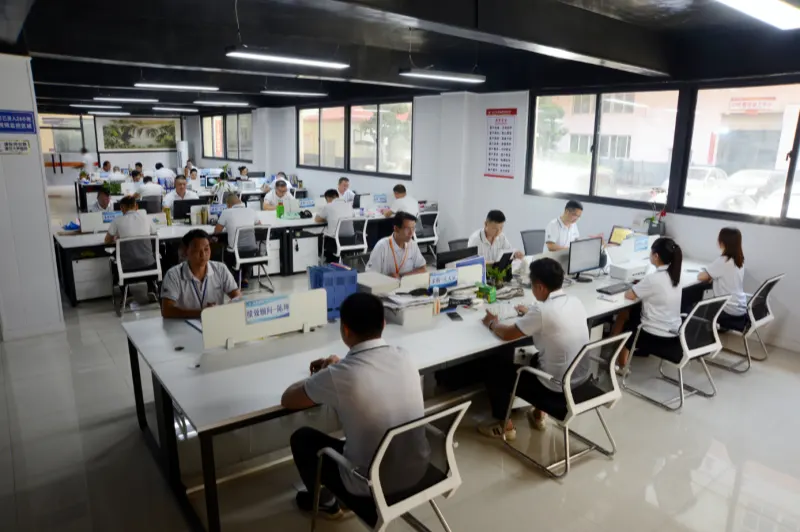
Trusted by Manufacturers Worldwide
We export and commission production lines configured to meet the localized electrical and industrial standards of Asia, Africa, Europe, Central Asia, and South America. Factory layout designs and mechanical/electrical configurations are adjusted based on client site specifications prior to shipment.
- Factory-Level Integration: Layout-matched supply of synchronized machinery, custom tooling, and auxiliary units based on client utility connections.
- Raw Material Pre-Calibration: Pre-shipment calibration of feeding and tension systems using client EVA/PVC formulas or non-woven GSM samples.
- Field Engineering & Commissioning: On-site equipment positioning, wiring installation, mechanical alignment, and operator run-time maintenance training.
- Technical Support Protocols: Remote troubleshooting via direct PLC connection and video, backed by standard emergency engineer dispatch.
Production Technologies
Servo Motion Control
Multi-axis closed-loop servo synchronization with electronic cam profiles.
Replaces mechanical gears to eliminate backlash and cumulative wear. Enables real-time, independent module speed adjustments on the fly, ensuring sub-millimeter cutting accuracy.
Automatic Material Splicing
Dual-shaft rotating unwinder with high-speed butt-splicing mechanisms.
Splices raw material at full line speed without stoppages. Eliminates cold-start thermal shocks and reduces splice-related material waste by up to 85%.
Web Tension Control
Closed-loop feedback via load cells, pneumatic dancer rollers, and PID controllers.
Measures web tension and adjusts drive-motor speeds within milliseconds. Prevents material necking or over-stretching to guarantee uniform product dimensions.
Ultrasonic Bonding
High-frequency (20 kHz to 40 kHz) acoustic generators and rotary anvil wheels.
Fuses thermoplastic fibers directly at the molecular level. Minimizes hot-melt glue usage, preventing seam leakage and adhesive-induced stiffness.
Multi-Zone Temperature Control
Segmented PID regulation utilizing Solid State Relays (SSR) and cooling loops.
Maintains mold plate temperatures within ±0.5°C. Mitigates thermal gradients in EVA foaming to prevent post-demolding shrinkage and surface blistering.
CCD Vision Inspection
High-speed industrial CCD cameras integrated with automated pneumatic rejection gates.
Scans the continuous web at full speed to detect defects, contamination, or missing components. Defective items are automatically rejected at the discharge outlet without interrupting production.
Comprehensive After-Sales Services
Equipment Installation & Commissioning
Our field engineers handle physical placement, alignment, wiring, and trial-run calibration to bring your system online rapidly.
On-Site Operator Training
Hands-on operational and maintenance training programs to ensure your local staff can run the line safely and efficiently.
Remote Technical Support
24-hour diagnostic support utilizing video analysis and live PLC monitoring to resolve operational queries instantly.
OEM Spare Parts Supply
Responsive logistics and dedicated spare parts packages to guarantee continuous, uninterrupted machine runtime.
Factory Planning Guide
Before purchasing a production line, verify your facility meets the following engineering criteria:
- Factory Space & Layout: Minimum clear footprint of 35m × 6m × 5m (L×W×H) required for high-speed diaper lines. Custom CAD floor layouts are provided to optimize operator paths and material flow.
- Power Supply Capacity: Installed power of 350 kW – 450 kW (stable running load ~280 kW). Requires dedicated industrial step-down transformers and stable 3-phase voltage regulation.
- Compressed Air Requirements: Continuous pneumatic supply of ≥ 0.6 MPa with a flow rate of ≥ 3.0 m³/min. Must be paired with a screw compressor, refrigerant dryer, and oil-water filters.
- Operator Quantity: Recommended crew of 3 to 4 operators per shift: 1 Main Operator (HMI/PLC supervision), 2 Splicing/Raw Material Feeders, and 1 Packaging Operator.
- Raw Material Storage: Moisture-sensitive raw materials (SAP, fluff pulp, nonwovens) must be stored in a dust-free environment below 60% relative humidity.
- Finished Goods Warehouse: Allocate a buffer zone near the packaging station capable of holding 2 to 3 days of peak machine output to match shipping cycles.
- Future Expansion: Design electrical panels, pneumatic main lines, and floor space with 20% to 30% overhead capacity to accommodate future auxiliary modules.
Installation & Commissioning
We guide you through a standardized, professional deployment timeline to transition your facility from an empty floor to stable mass production.

Phase 1: Site Survey: Engineering audit of factory layout, leveling tolerances, power distribution, and pneumatic lines.
Phase 2: Foundation Blueprints: Delivery of concrete anchoring coordinates, dynamic load ratings, and under-floor cable trench layouts.
Phase 3: Machine Assembly: Structural alignment, precision leveling, and modular coupling of unwinding, forming, and packing units.
Phase 4: Electrical Wiring: Shielded routing of servo power, high-resolution encoder signals, and pneumatic solenoid manifold lines.
Phase 5: PLC Debugging: Control program upload, dynamic physical I/O validation, and HMI touch interface calibration.
Phase 6: Raw Material Testing: Initial web threading, sensor alignment, and PID closed-loop tension profile calibration.
Phase 7: Trial Production: Low-speed mechanical dry runs, progressing to full-speed testing with raw materials to calibrate auto-splicers.
Phase 8: Operator Training: Hands-on training covering HMI sequences, cutter adjustments, splicing protocols, and preventive maintenance.
Phase 9: Mass Production: On-site parameter fine-tuning during initial commercial shifts to achieve target yield rates and minimize scrap.