
How Much Does a Nappy Machine Cost and How Can Manufacturers Choose the Right Solution?
July 29, 2026
The nappy machine price depends on multiple factors, including machine type, production capacity, automation level, product specifications, and customization requirements. For diaper manufacturers, the lowest purchase price does not always represent the best investment. A suitable nappy machine should match production goals, market requirements, and long-term operating plans. For example, a company entering the baby hygiene product market may choose a compact production line with moderate output, while an established manufacturer may require a high-speed automated system for large-scale production.
When evaluating equipment costs, buyers should consider the complete investment rather than only the initial quotation. The total cost includes machine purchase, installation, operator training, maintenance, spare parts, energy consumption, and future upgrades.
The hygiene products industry continues to develop as demand increases across global markets. Manufacturers need reliable equipment that can produce consistent products while maintaining efficient operations. Selecting the right supplier helps businesses reduce production risks and build a stable manufacturing process.
A professional nappy machine supplier should provide solutions based on customer requirements. These requirements may include diaper size range, production speed, raw material compatibility, factory layout, and automation preferences. Understanding these factors allows buyers to make better decisions and achieve a more suitable return on investment.
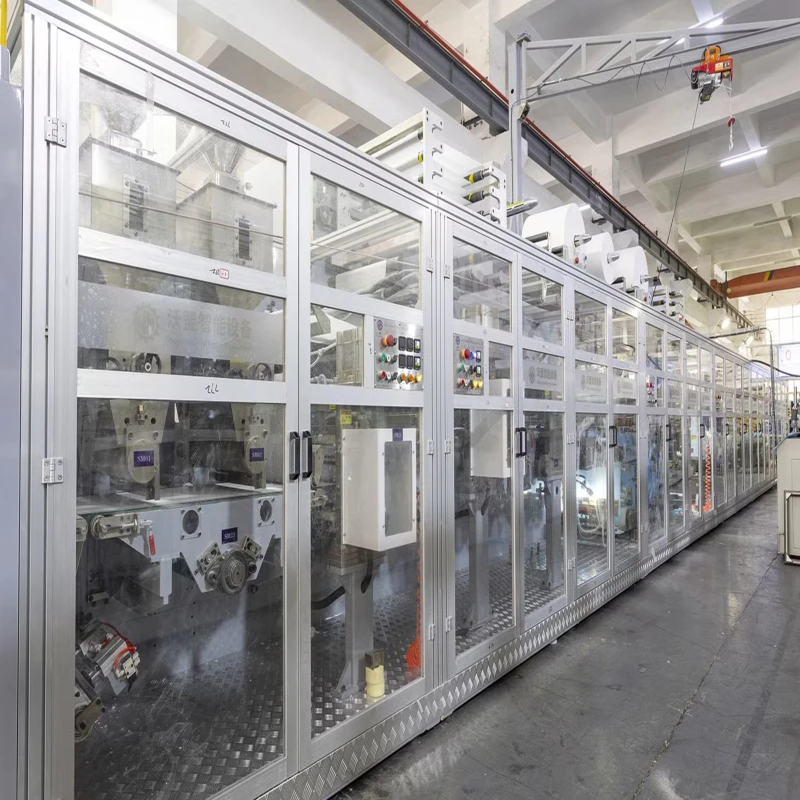
What Factors Affect Nappy Machine Price?
The price of a nappy production machine is influenced by several technical and commercial factors. Buyers should understand these elements before comparing quotations from different suppliers.
Production Capacity and Machine Speed
Production capacity is one of the main factors affecting equipment investment. Higher-speed machines usually require more advanced mechanical systems, control technology, and precision components.
Manufacturers should first define their production targets before selecting equipment.
Important capacity considerations include:
| Factor | Impact on Equipment Selection |
|---|---|
| Daily Output Requirement | Determines suitable machine speed |
| Product Demand | Influences production scale |
| Factory Capacity | Affects machine configuration |
| Future Expansion Plans | Determines upgrade potential |
Caption: Key Capacity Factors Affecting Nappy Machine Selection
For example, a small manufacturer supplying local markets may not need a high-speed production line. A large hygiene product company serving international customers may require continuous production with higher automation.
Choosing a machine that exceeds actual demand may increase unnecessary investment. Selecting equipment with insufficient capacity may limit business growth. A balanced approach helps manufacturers control costs while maintaining production flexibility.
Automation Level and Technology Configuration
Automation directly affects nappy machine price because it influences labor requirements, production stability, and operational efficiency.
Different automation levels are available for different manufacturing needs.
Common configurations include:
- Semi-automatic production systems
- Fully automatic diaper production lines
- High-speed intelligent manufacturing systems
A semi-automatic system may require more manual operation but can provide a lower initial investment. A fully automatic machine usually reduces labor requirements and improves production consistency.
For companies planning long-term growth, automation should be evaluated carefully. The right automation level depends on production volume, workforce availability, and market strategy.
For example, a new diaper manufacturer may start with a medium-speed machine and upgrade production capability later. An established producer may directly invest in a fully automated solution to support larger orders.
How Should Buyers Evaluate a Nappy Machine Before Purchase?
Purchasing a nappy machine requires careful evaluation of technical specifications, manufacturing capability, and supplier support. A machine is a long-term production asset, so buyers should review more than just the initial price.
Check Product Compatibility and Machine Design
Different diaper products require different machine configurations. A manufacturer producing baby diapers may have different requirements from a company producing adult diapers or training pants.
Before purchasing, buyers should confirm:
- Product size range
- Raw material compatibility
- Production speed
- Finished product structure
- Quality control functions
A supplier that understands hygiene product manufacturing can recommend suitable equipment configurations.
For example, a company producing newborn diapers may focus on soft material handling and accurate elastic placement. A manufacturer producing larger diaper sizes may require stronger material feeding systems and wider production capability.
Working with an experienced hygiene products machine supplier helps buyers select equipment based on actual product requirements instead of choosing only according to price.
Compare Machine Components and Manufacturing Standards
The structure and components of a nappy machine directly influence production reliability.
Important components include:
| Machine System | Function |
|---|---|
| Material Feeding System | Controls raw material supply |
| Elastic Application System | Adds elastic components accurately |
| Cutting System | Forms product shape |
| Control System | Manages production operation |
| Inspection System | Helps maintain product consistency |
Caption: Main Systems of a Modern Nappy Production Machine
A reliable machine should maintain stable operation during continuous production. Buyers should ask suppliers about component brands, maintenance requirements, and testing procedures.
A lower-cost machine may appear attractive at first, but poor component quality can increase downtime and maintenance expenses. A detailed technical comparison helps manufacturers understand the actual value of each solution.
What Type of Nappy Machine Is Suitable for Different Manufacturing Businesses?
Different businesses require different production solutions. The correct machine depends on product strategy, target market, and expected output.
Small and Medium Diaper Manufacturers
New manufacturers often focus on controlling investment while building market presence. They may need equipment that provides reliable production without unnecessary complexity.
Suitable considerations include:
- Moderate production speed
- Flexible product adjustment
- Reasonable maintenance requirements
- Future upgrade options
A properly selected machine allows new businesses to enter the market while controlling operational risks.
For companies focusing on baby diaper production, a dedicated diaper machine can support the manufacturing process with configurations designed for different product requirements.
Large-Scale Hygiene Product Manufacturers
Large manufacturers usually require higher production efficiency and stable output. Their equipment selection often focuses on automation, production speed, and integration with factory management systems.
Key requirements may include:
- Continuous operation capability
- Higher production output
- Automated quality control
- Reduced manual intervention
For example, an international hygiene product company may require multiple production lines to supply different markets. In this situation, equipment reliability and technical support become important decision factors.
Contact Bayeux for professional nappy machine solutions and production recommendations.
How Can Manufacturers Reduce Risks When Choosing a Nappy Machine Supplier?
Selecting a nappy machine supplier is an important decision because the supplier affects equipment quality, production stability, and long-term technical support. A reliable partner should provide suitable machinery based on product requirements instead of offering a standard solution for every customer.
Many manufacturers focus only on nappy machine price during the purchasing process. However, a lower quotation may not always reduce overall costs. Equipment performance, maintenance frequency, production efficiency, and technical support also influence the total investment.
Evaluate Supplier Experience and Technical Capability
An experienced supplier usually has a better understanding of hygiene product manufacturing requirements. The supplier should be able to explain machine functions, production processes, and possible challenges before purchase.
Before cooperation, buyers should evaluate:
| Evaluation Area | Questions to Consider |
|---|---|
| Industry Experience | How long has the supplier produced hygiene machinery? |
| Product Range | Can the supplier support different hygiene products? |
| Engineering Team | Does the company provide technical guidance? |
| Production Facility | Does the supplier have proper manufacturing capability? |
| Customer Support | Is assistance available after delivery? |
Caption: Key Supplier Evaluation Factors for Nappy Machine Buyers
For example, a company planning to produce baby diapers may need guidance on material selection, production speed, and product structure. A supplier with practical experience can help avoid unsuitable equipment choices.
A professional supplier should also provide clear technical documentation. This includes machine specifications, production capacity information, installation requirements, and maintenance recommendations.
Consider After-Sales Support and Long-Term Cooperation
Nappy production requires stable operation. Unexpected downtime can affect delivery schedules and customer relationships. Therefore, after-sales service should be included in the supplier evaluation process.
Important support services include:
- Installation guidance
- Operator training
- Remote technical assistance
- Spare parts supply
- Maintenance support
For international customers, communication efficiency is especially important. Clear technical support helps manufacturers solve operational problems faster.
A long-term supplier relationship can also support future business development. When manufacturers expand product categories or increase production capacity, an experienced equipment partner can provide additional solutions.
How Can Buyers Compare Different Nappy Machine Investment Options?
Comparing nappy machine options requires a complete understanding of production goals and operating costs. Different machines may have different prices because of differences in design, capacity, and technology.
Compare Initial Investment and Long-Term Value
The purchase price is only one part of the total investment. Manufacturers should consider the full production lifecycle.
Main cost factors include:
| Cost Factor | Business Impact |
|---|---|
| Equipment Purchase | Initial investment requirement |
| Energy Consumption | Influences daily operating expenses |
| Labor Requirement | Affects production costs |
| Maintenance Frequency | Impacts downtime and repair expenses |
| Production Efficiency | Determines output value |
Caption: Total Investment Factors for Nappy Production Equipment
For example, a fully automatic machine may require a higher initial investment. However, it may reduce labor requirements and improve production consistency over time.
A smaller machine may have a lower purchase cost, but it may not meet future production demands. Buyers should consider both current needs and future expansion plans.
Select Equipment Based on Product Development Strategy
The hygiene products market includes different product categories. Manufacturers may produce baby diapers, adult diapers, training pants, or other absorbent products.
Each product type may require different machine functions.
For example:
| Product Type | Important Machine Considerations |
|---|---|
| Baby Diapers | Size flexibility, elastic application, soft material handling |
| Adult Diapers | Larger product dimensions, stronger material control |
| Training Pants | Flexible production adjustment and waist design |
| Hygiene Products | Customized structure and material compatibility |
Caption: Product Requirements and Machine Configuration Considerations
A manufacturer planning to enter multiple product segments should select equipment with suitable flexibility.
A specialized baby diaper machine can help manufacturers produce baby diaper products with different specifications and market requirements.
FAQ About Nappy Machine Price and Selection
What factors determine nappy machine price?
Nappy machine price depends on production speed, automation level, machine configuration, product specifications, customization requirements, and supplier support services.
Why do two nappy machines with similar functions have different prices?
Different machines may use different components, technologies, production capacities, and quality standards. Buyers should compare technical details instead of only comparing quotations.
What production capacity should I choose for a nappy machine?
The suitable capacity depends on market demand, production goals, factory conditions, and future business plans. Manufacturers should select equipment based on expected output rather than maximum available speed.
Is a fully automatic nappy machine worth the investment?
A fully automatic machine can reduce manual operations and improve production consistency. It may be suitable for manufacturers with larger production requirements or long-term expansion plans.
How long does a nappy machine usually operate?
The service life depends on machine design, operating conditions, maintenance procedures, and usage frequency. Regular maintenance and proper operation can help extend equipment performance.
Can one nappy machine produce different diaper sizes?
Many modern machines support multiple product sizes. However, the available range depends on machine design and configuration. Buyers should confirm size requirements before purchasing.
Why should manufacturers choose an experienced nappy machine supplier?
Experienced suppliers understand production challenges and can provide better equipment recommendations, technical support, and customized solutions.
About Bayeux
Bayeux specializes in providing hygiene product manufacturing equipment for global customers, including baby diaper production solutions and other absorbent product machinery. As an experienced manufacturer of hygiene equipment, Bayeux focuses on helping customers select suitable production systems based on product requirements, capacity targets, and factory conditions.
The company provides solutions covering different stages of hygiene product manufacturing. Its equipment supports manufacturers that need stable production processes, flexible configurations, and technical assistance.
For businesses looking for a reliable baby diaper making machine, Bayeux provides equipment solutions designed around practical production needs. The company works with customers to understand their market requirements and recommend suitable machinery configurations.
Choosing the right nappy machine supplier is a key step in building a successful hygiene product manufacturing business. By evaluating technology, production capability, support services, and long-term value, manufacturers can make better investment decisions.
References
- Diaper and hygiene product information:
https://en.wikipedia.org/wiki/Diaper - World Health Organization information on hygiene and sanitation:
https://www.who.int/health-topics/sanitation - European Disposables and Nonwovens Association information:
https://www.edana.org/


