
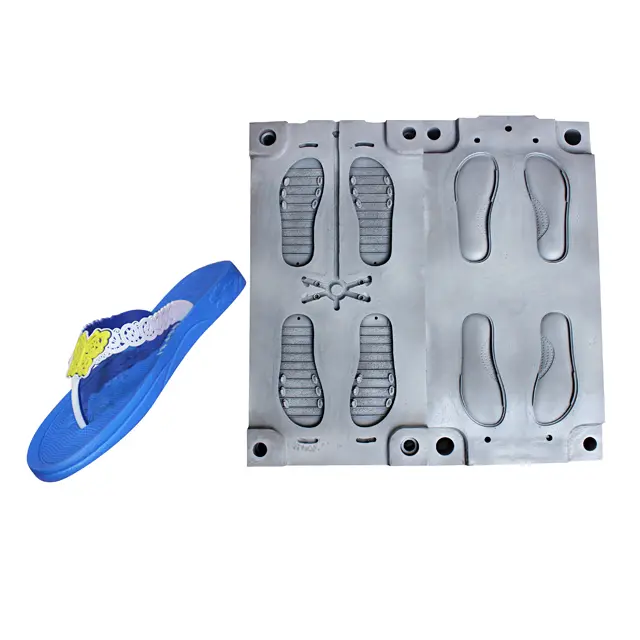


EVA Sole Slipper Mould
PRODUCT DETAIL
In modern footwear manufacturing, maximizing production flexibility while minimizing tooling costs is the key to profitability. High-quality EVA slipper moulds offer an exceptional ROI by serving as a universal base for various footwear styles.
Once the EVA sole is injected and formed, it can be seamlessly paired with diverse upper materials, including:
-
Genuine & Synthetic Leather Uppers
-
Flexible PVC/TPU Uppers
-
Breathable Fabric & Textile Uppers
By utilizing a single, premium EVA slipper mould for multiple upper designs, manufacturers can vastly expand their product catalog, rapidly respond to market trends, and drastically reduce overall initial mould amortization costs.
Step-by-Step Ordering & Engineering Process
To ensure precise tolerance controls and flawless pattern replication, the production follows a rigorous, collaborative workflow:
-
Design Selection: Align on the initial sole and upper concept designs.
-
3D Design & CAD Confirmation: Review and approve the detailed 3D digital renderings.
-
Wooden Dummy Validation: Inspect the physical wooden dummy pattern to confirm precise textures, dimensions, and chemical etching specifications.
-
Contract & Deposit: Finalize technical specifications, sign the commercial contract, and remit the deposit.
-
Mould Precision CNC Machining: Begin the actual fabrication and CNC milling of the aluminum/steel mould.
-
Mould Testing & Sampling: Run physical trial injections to produce actual EVA sole samples.
-
Upper Fitting & Assembly Check: Use the physical sole samples to test compound compatibility and fitment with various upper types.
Advanced Manufacturing & Rigorous Quality Control
To further optimize factory throughput, these moulds can be engineered in multi-cavity configurations—including one-mould-two-pairs or one-mould-three-pairs for children's sizing—doubling or tripling production output per injection cycle.
Quality assurance is integrated directly into the manufacturing process. Upon mould completion, we conduct live trial runs using a high-performance EVA shoes machine and industry-standard EVA raw materials. This critical testing phase validates shrinkage rates, expansion ratios, and overall structural integrity. All critical parameters and operational data during this trial are meticulously documented and provided to you as a technical reference sheet for a smooth setup on your own shoe manufacturing machine.
We offer full-spectrum OEM/ODM options
- Appearance: Custom 2D/3D textures, logos (embossed or debossed), and multi-color segment tooling (e.g., 2-part 1-color moulds for dual-color effects).
- Structure: Customized sole thickness, specific foam density/softness integration, and exclusive tread designs.
Application Advantage
- Lower production cost per pair
- Faster cycle time for mass production
- Stable product consistency
- Flexible design adaptability
- High suitability for export manufacturing
Footwear Mold Application
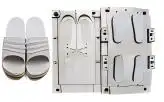 | 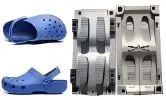 | 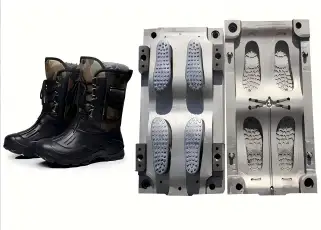 | 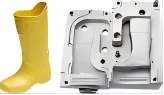 | 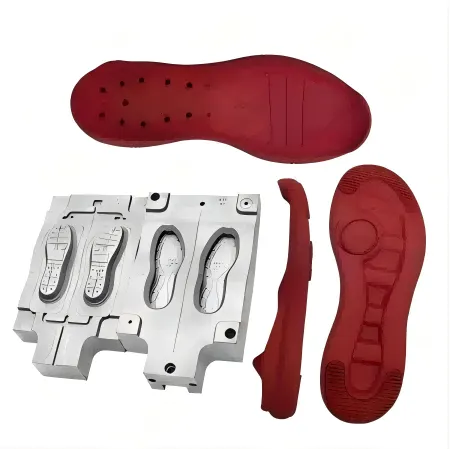 | |
| Category | EVA Slippers | Modern EVA Shoes | Winter EVA Shoes | Rain Boots | Outsole Mold |
| Production Advantage | Lightweight & fast cycle time | High detail accuracy | Thick insulation structure | Waterproof seamless design | High durability rubber effect |
| OEM Options | Design/Logo / Color / Size/Shoes details | Design/Logo / Color / Size/Shoes details | Design/Logo / Color / Size/Shoes details | Design/Logo / Color / Size/Shoes details | Design/Logo / Color / Size/Shoes details |
Data Generation Reference
| Machine Type | Output Range (pairs/hour) |
| 2 Station | 12 – 80 pairs |
| 4 Station | 24 – 160 pairs |
| 6 Station | 36 – 240 pairs |
| 8 Station | 48 – 320 pairs |
Machine steps
- Check and align heights: Before installation, ensure that all mold heights are perfectly uniform to guarantee even pressure distribution during mold clamping.
- Secure screws and monitor: Physically install and tighten all screws; then, configure temperature, time, and pressure settings via the PLC system to monitor the automated injection molding and foaming heating processes.
- Automatic mold opening and spraying: Once the foaming process is complete and the mold opens automatically to eject the product, immediately spray mold release agent to clean the mold cavity and prepare for the next cycle.
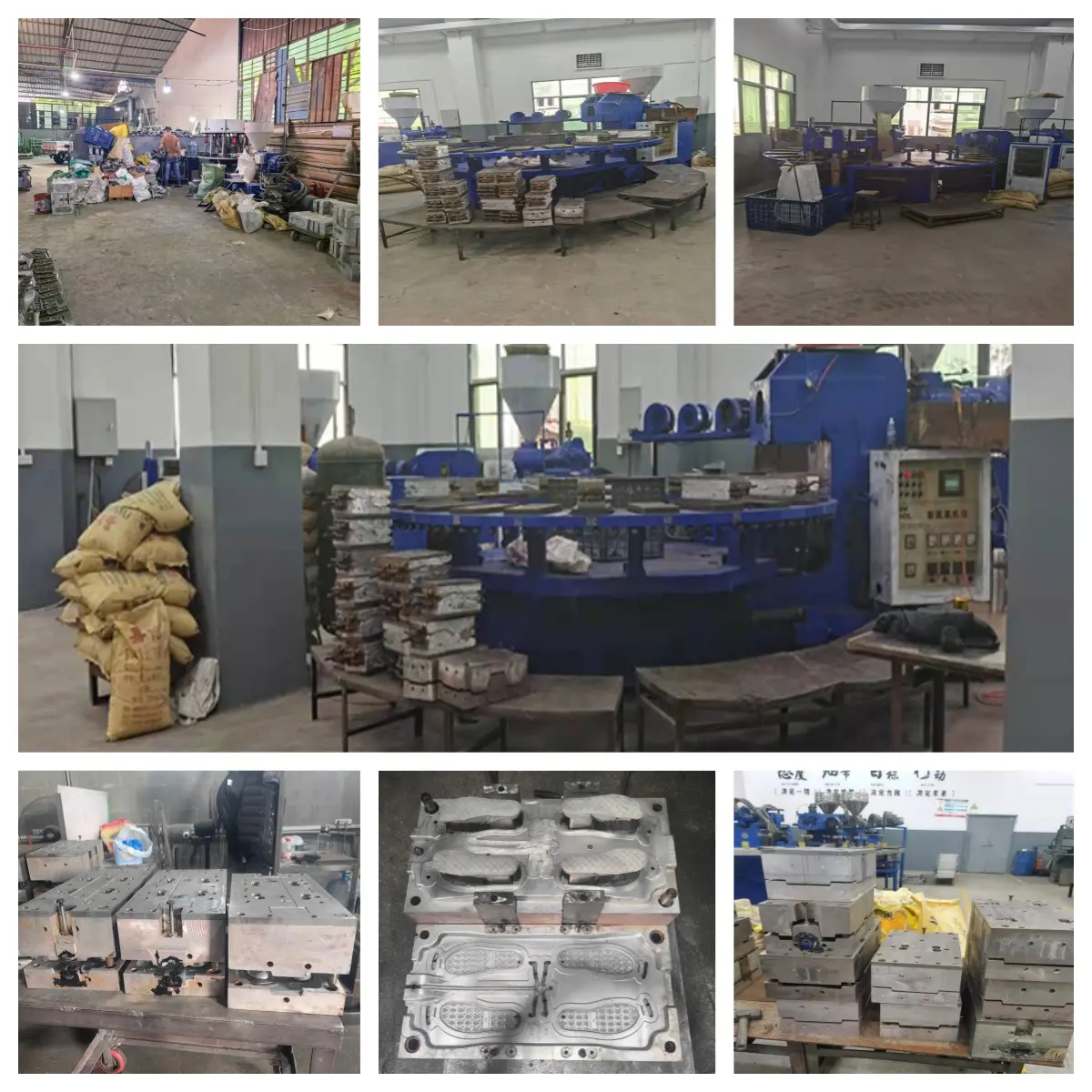
FACTORY VIEW
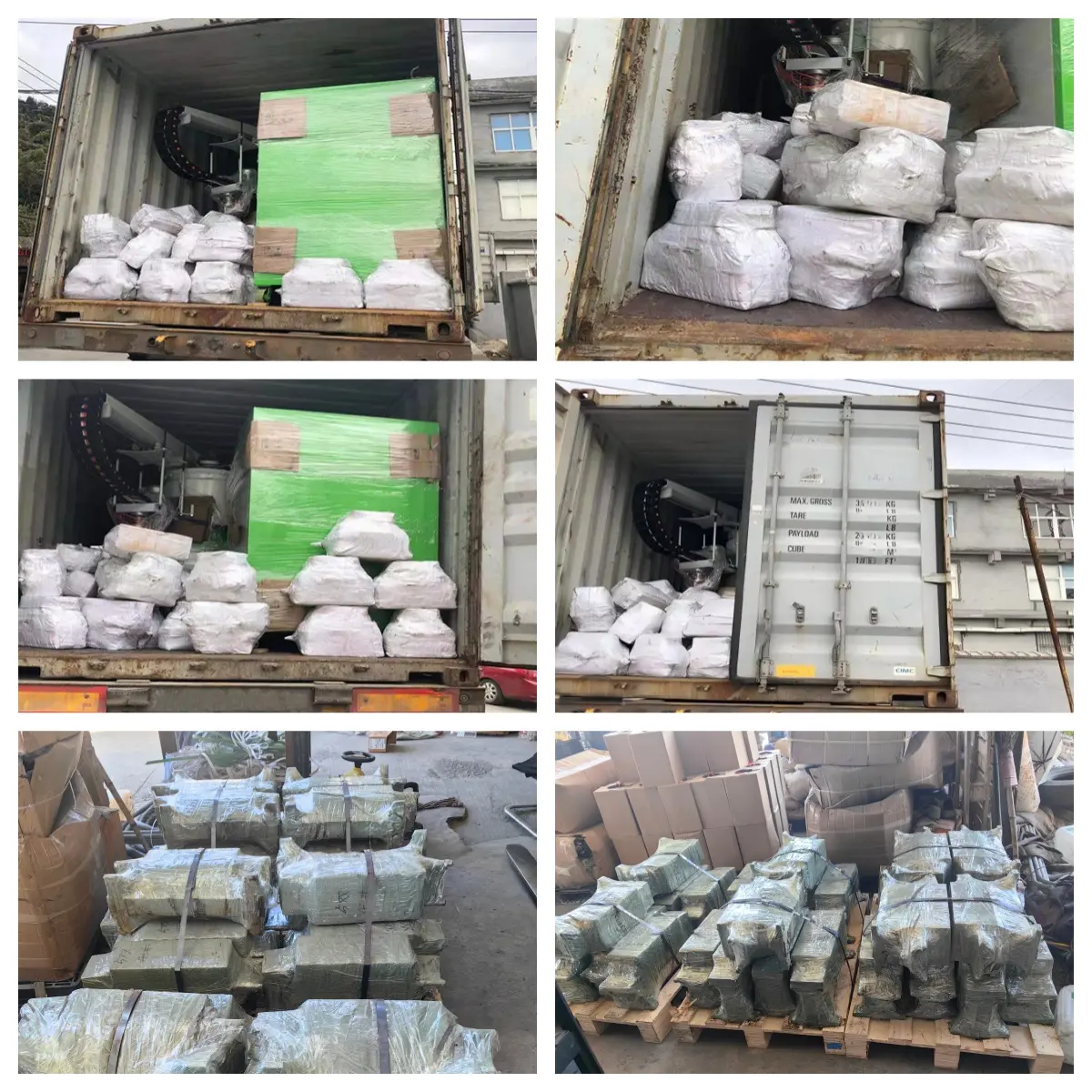
SHIPPING
SOLUTIONS & FAQ
Q: What is included in a complete EVA mold system?
Q: What is the EVA expansion ratio in molding?
Q: How long does mold production take?
Q: Can I send my own shoe sample for mold development?
Q: What affects EVA shoe quality during production?
Q: Is mold testing included before delivery?
A: Yes, trial production is carried out before final shipment.
Q: What is the main factor affecting mold cost?